
Blink:
I had not been in an American supermarket in seven years. On a recent visit to the States, I could not resist conducting a store check to see the impact of the new dietary guidelines recommending a reduction in the intake of ultraprocessed foods. Initial observation: Nonsensical!
Read On:
Out of the gate I was amused. Within fifty yards of the entrance I spotted a special pre-checkout aisle display of a new product Sweet & Tangy BBQ Doritos Protein (10g Protein per 1oz. serving) with bold black signature Doritos packaging including a laundry list of CPG packaging marketing speak (Always Bold, no artificial flavors or sources, Big Taste Iconic Crunch, etc.).
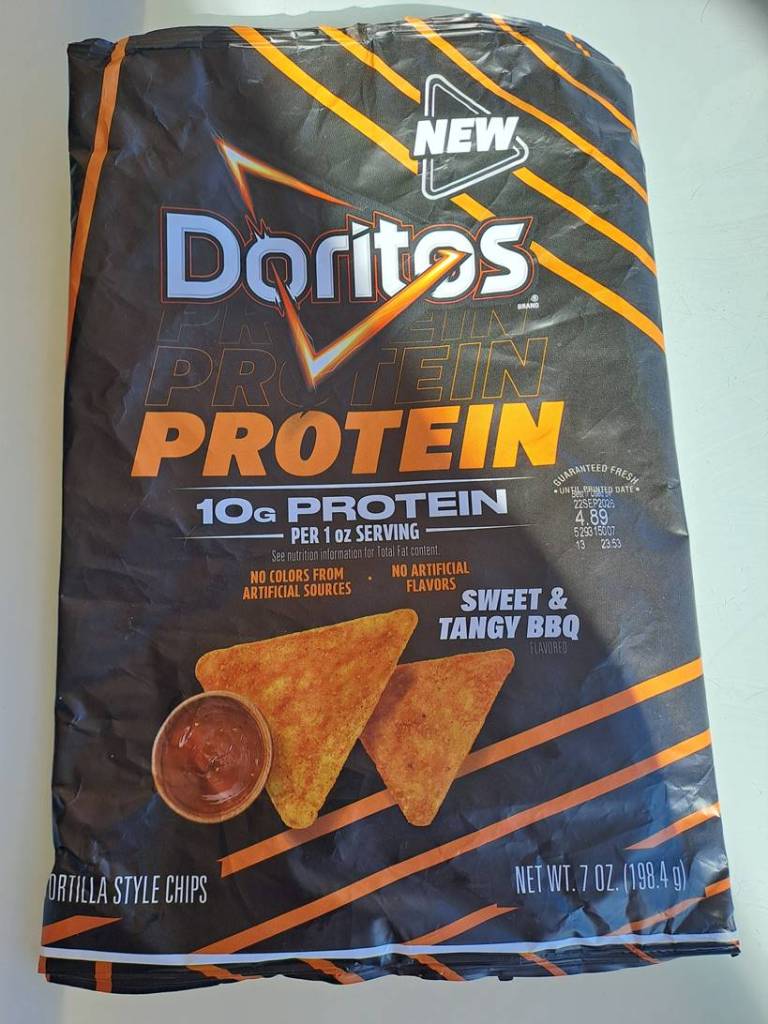
Stop! Frito Lay is launching a Doritos line extension formulated with milk protein (casein) to capitalize on the recent food popularity of consumers seeking to eat more protein in their daily diets to enhance their weight management based on some preliminary clinical trials. Yet this product under the Nova classification (a four level food nutrition classification system) falls squarely into Group 4 the ultimate ultra-processed foods which are industrial formulations made with refined ingredients and additives that you cannot replicate in a home kitchen. With all the good sources of protein – animal, fish, diary, plant-based (legumes); why consumers would eat Doritos for a source of protein blows me away. Let’s do some Nutrition Facts label math: One serving is about 10 chips (28g) or 150 calories delivers 20% daily value of protein. (Note: 8g 10% total fat) Does the average consumer stop at 10 or include the broken pieces they consume. So, the tradeoff is consuming protein in an ultra-processed snack food which the new dietary guidelines recommend we reduce. Is the marketing team at Frito Lay serious? Or they relied on their Doritos consumer AI data output to develop this new line extension. Or they took a PT Barnum 101 marketing course.
“There’s a sucker born every minute.” – PT Barnum

